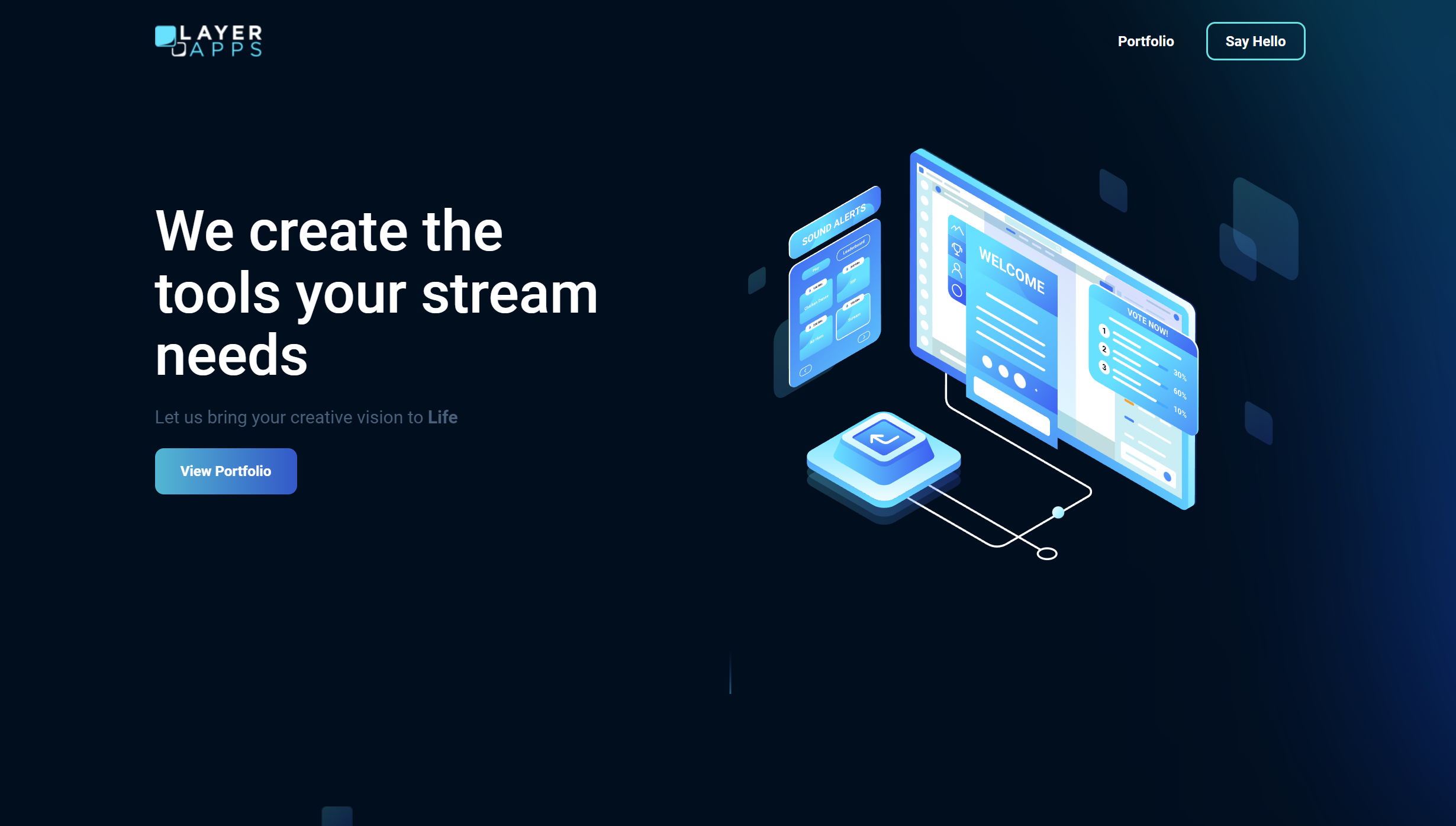
I developed the new landing page for the company LayerApps using Nuxt 3 and Vue 3, leveraging their modern architecture to create a fast, modular, and highly maintainable frontend.
The page prioritizes performance, scalability, and clean component structure. Thanks to Nuxt’s server-side rendering and optimized build process, the site loads quickly and delivers a smooth user experience across devices. Styling and layout were implemented with a focus on clarity and usability, staying closely aligned with the company’s visual identity.
For deployment, the application is using Firebase Hosting, where I configured the runtime environment, build pipeline, and deployment workflows to ensure reliability, automatic scaling, and seamless version management.
This approach allowed the implementation to stay flexible while still respecting the core visual language of the brand, resulting in a polished, production-ready page that reflects both technical and design intentions.
The page prioritizes performance, scalability, and clean component structure. Thanks to Nuxt’s server-side rendering and optimized build process, the site loads quickly and delivers a smooth user experience across devices. Styling and layout were implemented with a focus on clarity and usability, staying closely aligned with the company’s visual identity.
For deployment, the application is using Firebase Hosting, where I configured the runtime environment, build pipeline, and deployment workflows to ensure reliability, automatic scaling, and seamless version management.
Design Integration & Workflow
The visual direction for the landing page was created by the company’s designer in Figma. My role was to translate those designs into a functional Nuxt 3 application while maintaining accuracy and consistency across the interface. Instead of traditional design reviews, our workflow focused on quick iteration: I regularly synced with the designer to clarify interactions, resolve edge cases, and adapt components when parts of the design evolved during development.This approach allowed the implementation to stay flexible while still respecting the core visual language of the brand, resulting in a polished, production-ready page that reflects both technical and design intentions.